
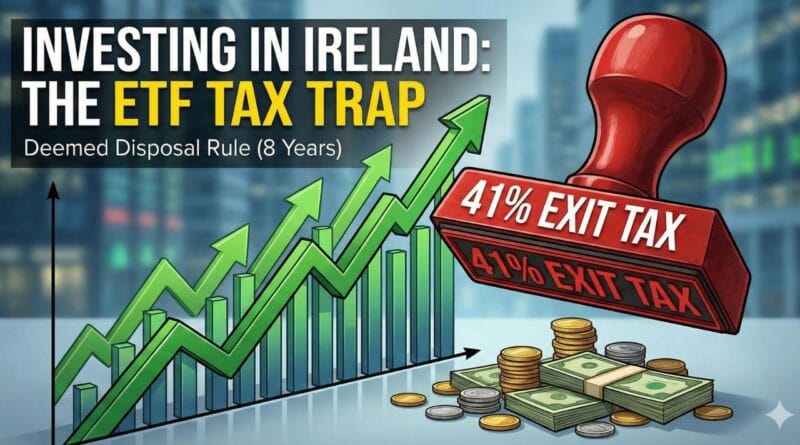
The 41% Trap: The Truth About Investing in ETFs in Ireland (2026 Warning)
CORK – Investing in the stock market has never been easier with apps like Revolut, Trading 212, and DEGIRO. Most beginners start by buying ETFs (Exchange Traded Funds) like the S&P 500.
But wait. Ireland has some of the harshest tax rules in the world for ETFs. If you don’t know them, you could face a massive tax bill.
🛑 The 41% “Exit Tax”
Unlike normal stocks (like Apple or Tesla) where you pay 33% Capital Gains Tax (CGT), ETFs are taxed differently.
- The Rate: You must pay 41% tax on any profit you make from an ETF.
- No Allowance: You cannot use the €1,270 annual tax-free allowance for ETFs. You pay tax on the very first Euro of profit.
📅 The “Deemed Disposal” Rule (The 8-Year Rule)
This is the rule that shocks most investors.
- What is it? Revenue assumes you “sold” your ETF every 8 years, even if you didn’t!
- The Impact: Every 8th anniversary of your purchase, you must calculate your profit and pay 41% tax on it, even if you never withdrew the money. This kills the power of compound interest.
✅ Smart Alternatives
Because of these rules, many Irish investors look for alternatives:
- Investment Trusts: These trade like stocks (e.g., Jamieson Settle) and are subject to the lower 33% CGT.
- Pension Contributions: Investing via a pension is Tax-Free and is the most efficient way to build wealth in Ireland.
Conclusion Before you click “Buy” on that S&P 500 ETF, talk to a financial advisor. For many young investors in Ireland, maximizing pension contributions is a smarter move than facing the 41% ETF tax.